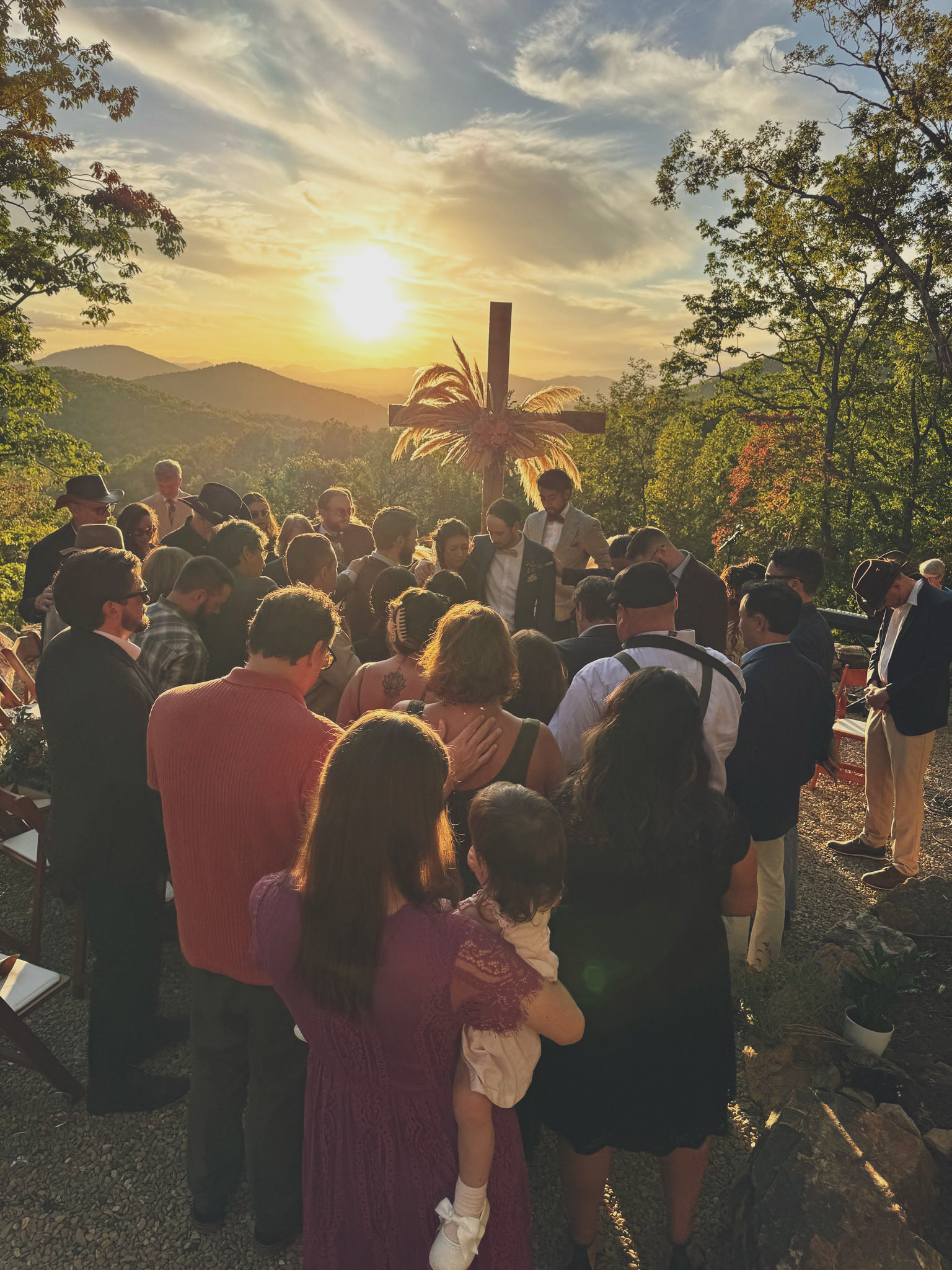
The forecast leading up to the wedding kept hedging. We watched the radar more than either of us would like to admit. And then the day itself dawned dry, calm, and clear — and at the moment we said our vows, the sun was setting behind the mountains in the most generous way you could ask for. The day delivered.
For about a week before the wedding, the weather was an open question. We had a contingency plan, of course — there's always a contingency plan when you're getting married outside in the mountains in October — but we'd both quietly hoped for the version of the day where everything happened where we'd planned it: the ceremony at the cross on the overlook, dinner under the lights, dancing under the stars. And the morning of the wedding, the sky cleared. The whole afternoon was dry. By the time the ceremony began, the air had cooled into something soft, and the sun was beginning its slow drop behind the ridge. We didn't take it for granted for a second.
The morning
Pao spent the morning of the wedding in the master suite of the house on the property. The hairstylist arrived early. The makeup artist set up by the window. The photographer drifted between rooms quietly, the way good photographers do. Family came in and out — coffee was poured, dresses were checked, a few small things were laughed about. There was a stretch of time where she paused for prayer with close friends and family, asking God to be present in the day that was about to unfold. That moment, more than any other, set the tone for everything that followed.
Guests arriving
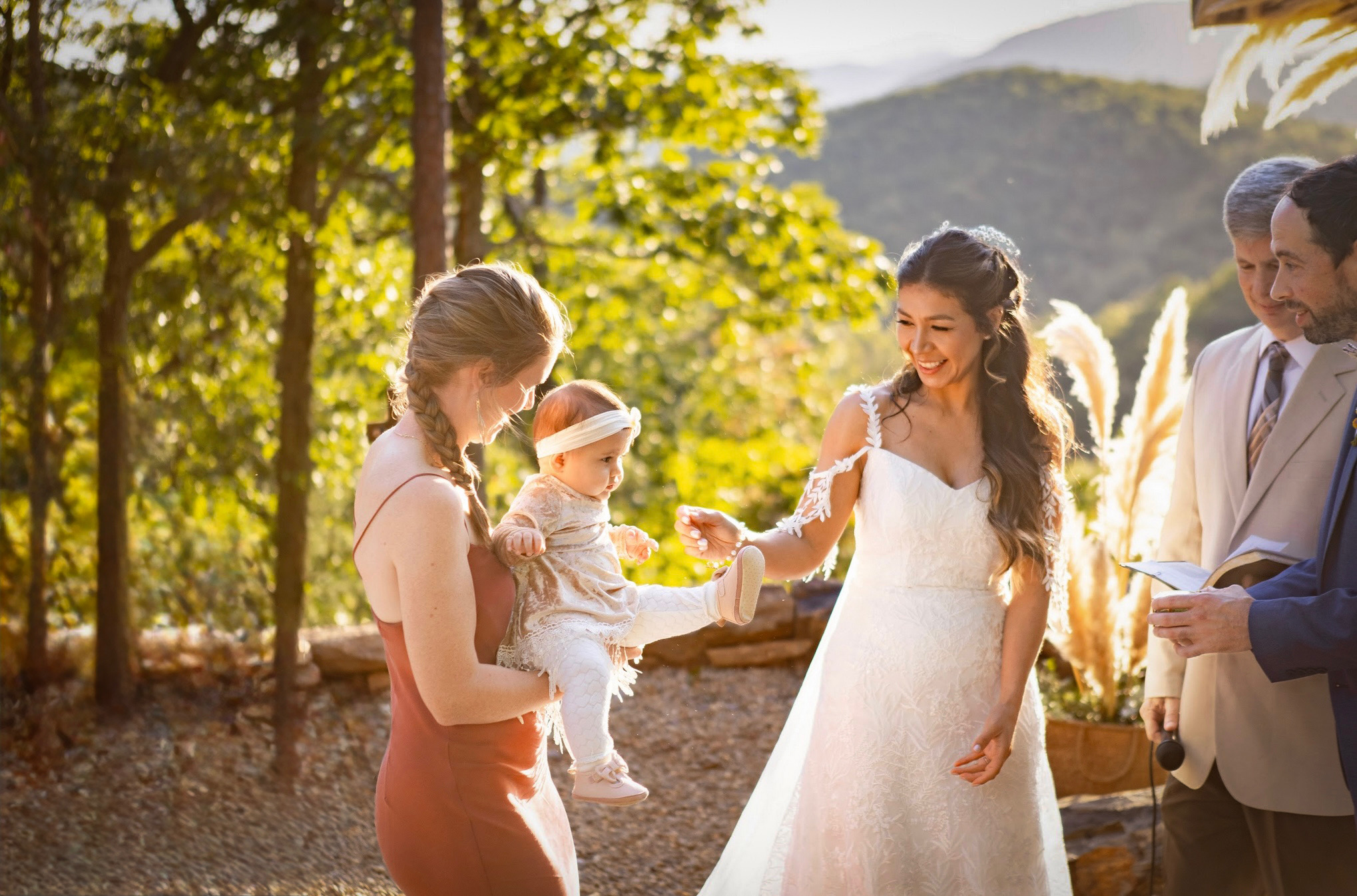
Guests began arriving in the early afternoon. We'd built a welcome area at the front of the house — a stretch of vintage decor Pao had been gathering for weeks, with a Polaroid camera, a guest book where every person was asked to take a picture and write a note, refreshments, drinks, and a generous charcuterie spread. People wandered, hugged, took photos, signed the book. We've kept that book. Months later, we still take it out and read what people wrote.
A friend played acoustic guitar through that whole stretch of the afternoon — classical pieces, mostly, the kind of music that holds a moment without filling it. Guests drifted between the welcome area and the ceremony site as the afternoon stretched on. Nobody was rushed. There was no schedule to perform.
The ceremony
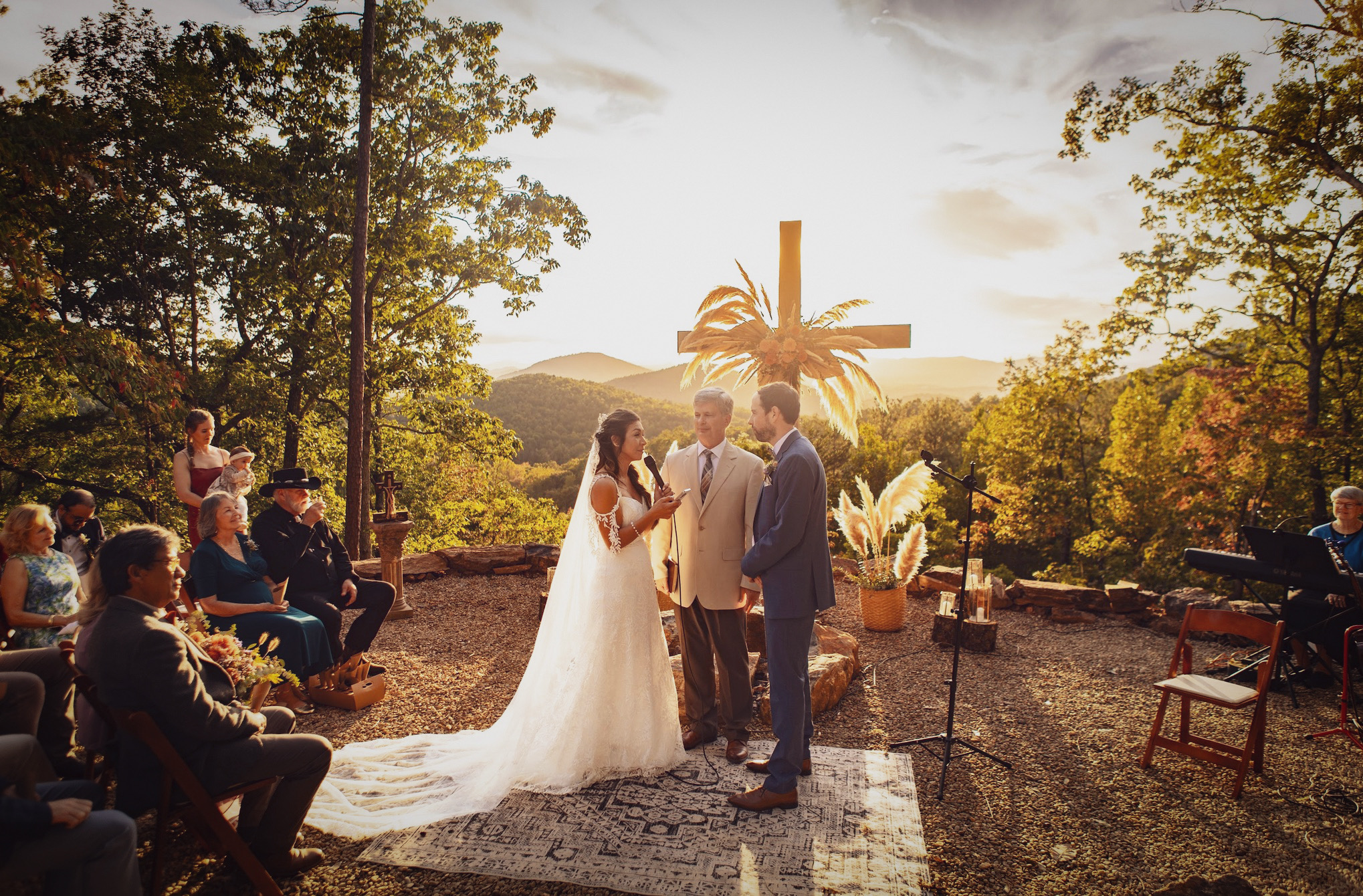
The ceremony itself was short, intentional, and centered on what the day was actually for. Our pastor — a close friend of ours — officiated. Pao's brother read scripture. My father played guitar and sang. Another close friend played the keyboard for Pao's processional and recessional. We wrote our own vows and read them to each other under the cross at the overlook, with the Blue Ridge stretching out behind us toward the western horizon.
One of the elements we built into the ceremony was a cord-of-three-strands ritual, drawn from Ecclesiastes 4:12: "A cord of three strands is not quickly broken." The image is simple — two strands woven together are stronger than one, but a cord of three strands, with God woven through them, is harder still to break. We wove three strands together as part of the ceremony as a physical reminder of what we were committing to and who we were committing to it with.
The moment we still talk about
The most powerful moment of the day, and the one we still talk about months later, came at sunset. After we had said our vows, family and friends gathered around the two of us at the overlook, and several of them prayed over us out loud, in turn. Pao and I prayed too. The sun was setting behind the ridges as it happened. The air was very still. There was no music, just voices and the mountains.
Guests have told us, repeatedly, that this was one of the most powerful moments they have ever experienced at a wedding. We feel the same way about it. The combination of the people we love speaking blessing over us out loud, and the sun setting behind the Blue Ridge as they did, made the covenant we had just entered feel real in a way that no signed document could. It solidified something we'd already chosen — and it solidified it in front of the people whose witness we wanted most.
It was one of the most powerful moments I've ever experienced at a wedding. The mountains, the sunset, the prayer — it didn't feel like a ceremony. It felt like a covenant. — A guest
Dinner, and the rest of the night
After the ceremony, we moved into the dinner. Tables were set beautifully under the lights — the work of family and Pao's months of gathering vintage pieces had all come together in a setup that, again, didn't look like a wedding catalog. It looked like us. A curated playlist played through dinner. Friends opened champagne, first under the string lights, and later, as the evening cooled and the sky darkened, under the stars.
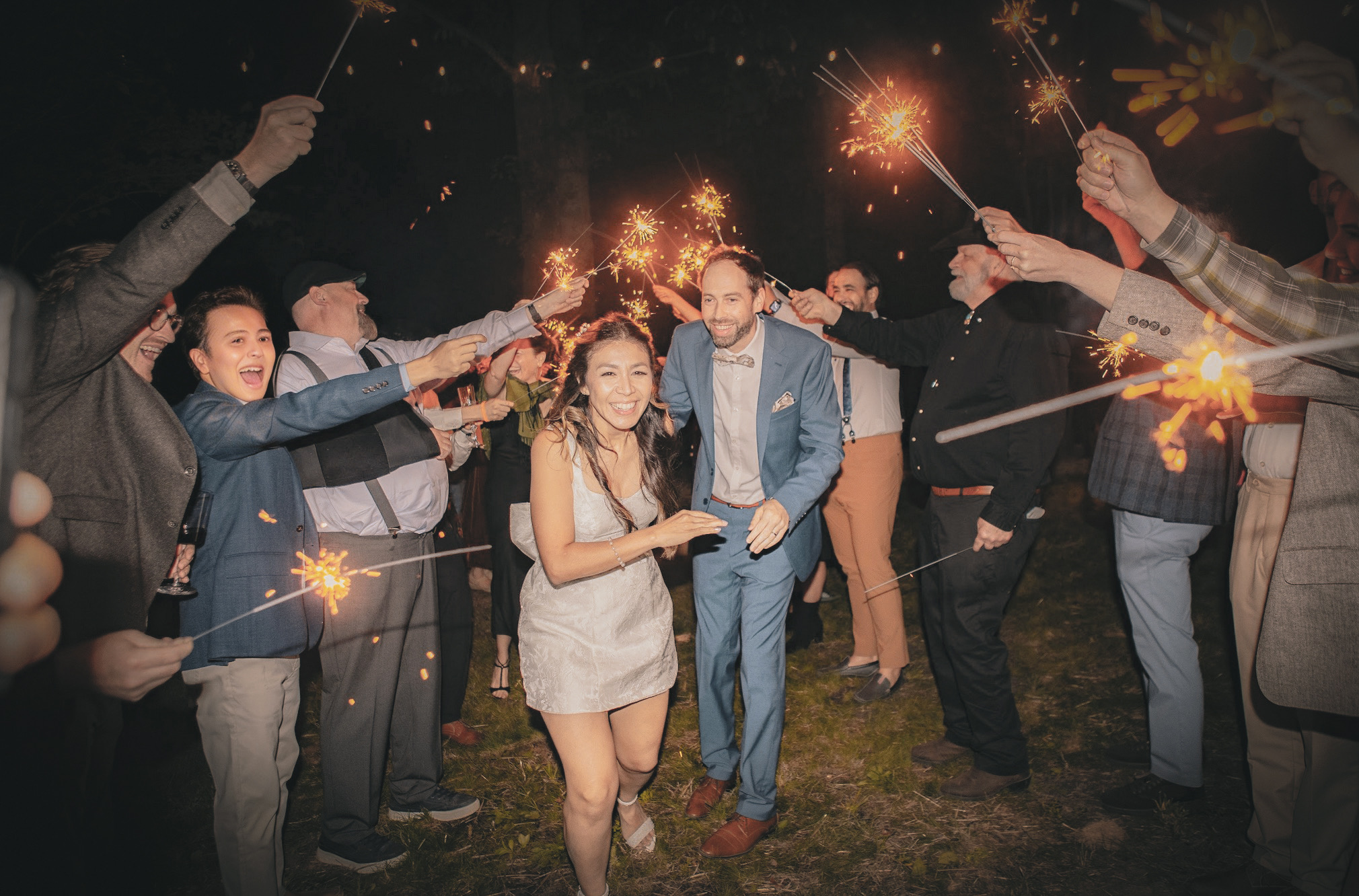
After dinner, the energy shifted. There was dancing. We did our first dance at the overlook itself, under the stars, where the ceremony had been just a few hours earlier. Sparklers came out for photographs — a long, glowing line of guests holding sparklers as we walked through. By the end of the night, the property was lit only by the string lights and the moon, and the people we loved most were laughing on the ridge where we had just promised the rest of our lives to each other.
What guests said afterward
In the days and weeks after, we heard from guest after guest. The words that came up most were authentic, heartfelt, meaningful, and unique. Several people, separately, told us it was one of the most memorable or impactful weddings they had ever attended. Some said it was one of the most beautiful venues they'd ever seen — and given that many of them have been to weddings far more elaborate and expensive, that comment landed with particular weight for us. We hadn't tried to compete with anything. We'd just built a day that was true to who we are, in a place that already had something to say. And it turned out that was enough — more than enough.
Looking back
If we were doing it again, we wouldn't change the venue. We wouldn't change the decision to do it ourselves. We wouldn't change the ceremony, or the cord of three strands, or the sunset prayer, or the dinner, or the dancing. The only thing we'd change is what we wrote in the previous post — we'd hand the day-of coordination off to one specific person whose only job was to run the show. Beyond that, we wouldn't touch a single thing.
What we walked away with — beyond the marriage itself, which is the whole point — is the conviction that smaller can be bigger. That a day with fifty people you love is more meaningful than a day with two hundred where half of them are obligations. That the place you choose matters as much as the people you invite. And that a wedding doesn't need to be a production to be the start of something profoundly real.
If you've read all three of these and any of it has resonated, that's probably a sign. We're glad to have built a venue out of the place where this all happened, and we're glad to host couples who want what we wanted: a setting that doesn't need decoration, a guest list that doesn't need to be performative, and a day that's entirely your own.
— Andrew & Pao