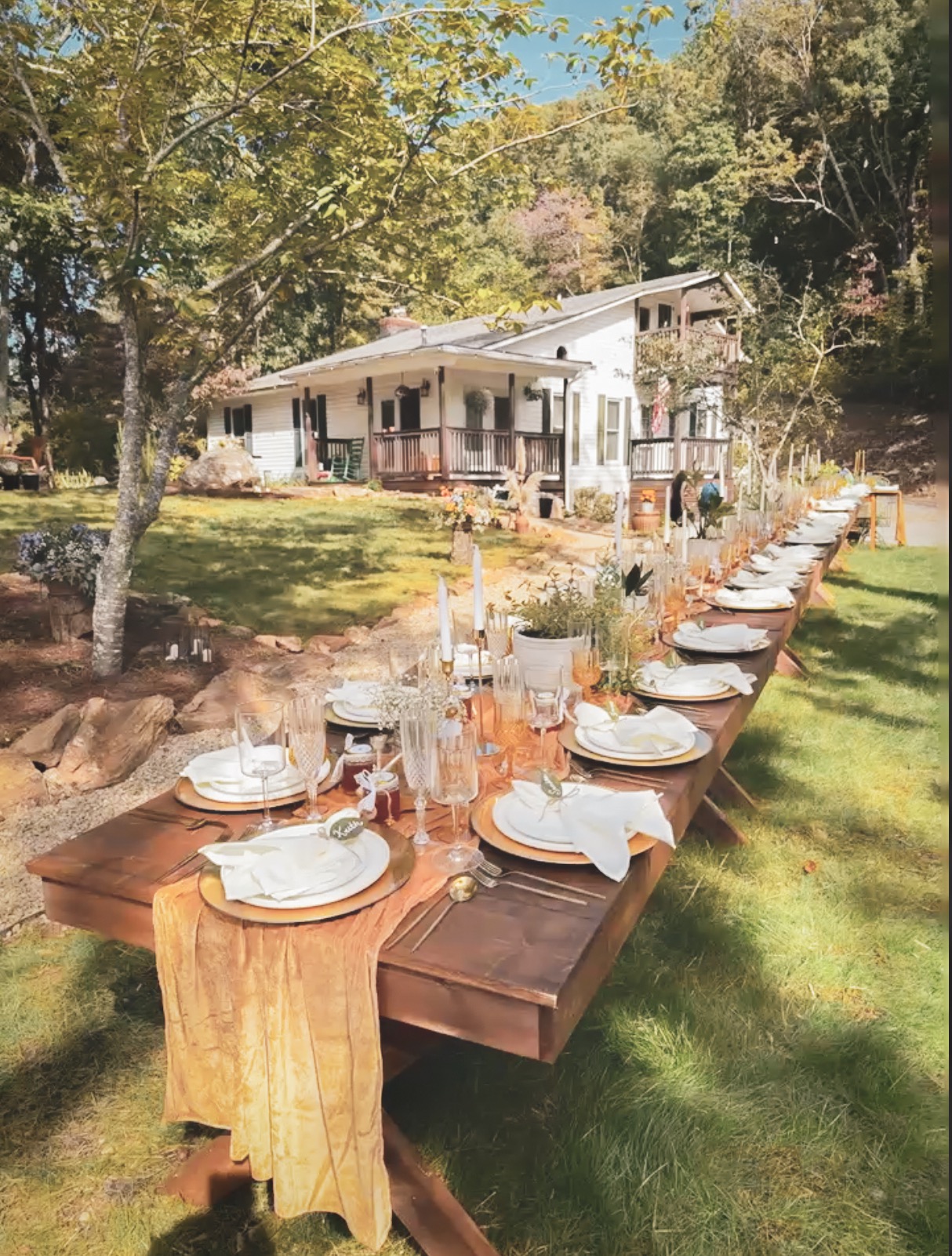
Once we made the decision to do it on the ridge, planning happened fast. Four months, under fifty guests, no wedding planner, no bridal party. What followed was the most rewarding logistical project either of us has ever taken on — and a lesson in what's worth spending money on and what isn't.
The minute we said yes to the idea, the timeline collapsed in the best way. Big weddings often need a year or more, mostly because the logistics of moving 100 to 200 people through a single day require months of coordination — vendors, transport, blocks of hotel rooms, save-the-dates that go out early enough to clear everyone's calendars. Once we capped our guest list under fifty, that whole calculation flipped. Fewer schedules to align meant more flexibility on dates. Fewer moving parts meant we could plan in months instead of seasons. Total planning window from "we're doing this" to the day itself: about four months.
What we hired out, and what we did ourselves
The decision-making framework we used over and over was simple: what's worth our time, and what's worth our money? Things that would steal energy from being present on the day, we hired out. Things that benefited from someone we knew and loved being involved, we kept in the family.
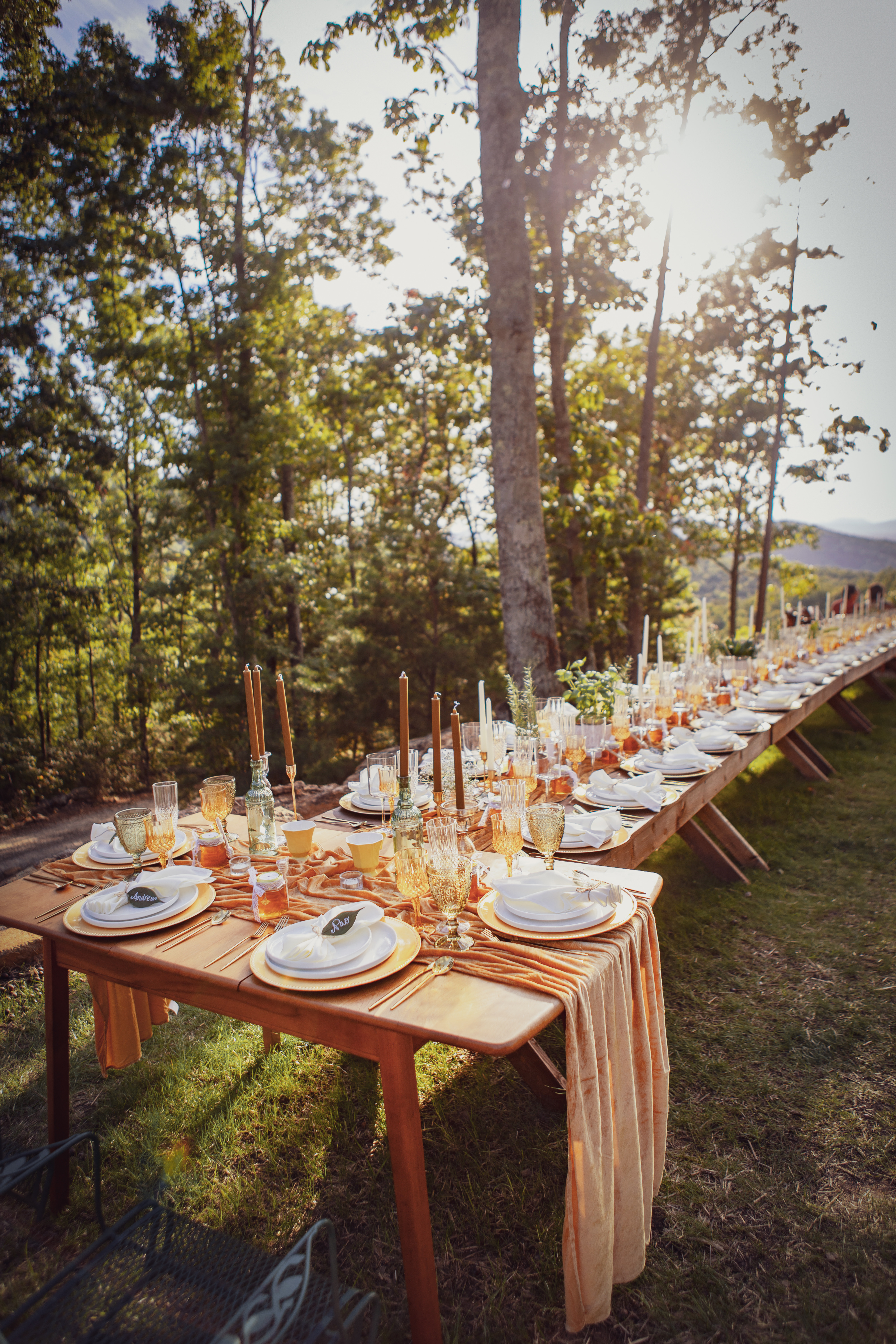
We hired a local caterer for the food, because cooking for fifty people is not how either of us wanted to spend our wedding day, and there are people whose entire profession is doing it well. We hired a local photographer for the same reason — you only get the day once, and the photos outlast almost everything else about it. We rented our tables and chairs from a local rental company that delivered, set up, and broke down. Beyond those three, almost everything else was done by people we know.
Our pastor — a close friend of ours — officiated the ceremony. A friend played acoustic classical guitar before the ceremony as guests arrived. Another friend, a wonderful keyboardist, played the music for the actual ceremony — Pao walking down the aisle, the recessional. A different close friend ran the show: the unofficial coordinator who knew the timeline and made sure things happened in the right order. Family helped with the floral arrangements and decorated the ceremony area. My father played guitar and sang during the ceremony. Pao's brother read the scripture. It was, genuinely, a community-built event. And looking back, that may be the single thing that made it feel as meaningful as it did.
What we spent on, and what we skipped
Catering and rentals were the two non-negotiables for us. We didn't want anyone — us, family, or friends — running between a hot kitchen and the ceremony site. The caterer brought the food, the rental company brought the tables and chairs, and that took care of probably 80 percent of the actual logistics on the day.
What we skipped tells you almost as much about the day as what we kept. There was no rehearsal dinner, because there was no real rehearsal — the ceremony was simple enough that we walked through it once, in our heads, and that was enough. There was no traditional bridal party, because we didn't have one. We had close friends who participated in different ways, but no choreographed lineup, no matching outfits, no separate getting-ready party of eight people in a separate house. There was no brunch the next morning. The wedding day was the event. It was complete on its own. We didn't need three other smaller events around it to give it weight.
Spend money on the things that protect your presence on the day. Skip the things that exist mostly because other weddings have them.
The guest list — the hardest part of all of it
Trimming a guest list down is genuinely difficult. You start with 80 to 100 people and you have to do real subtraction. The way we approached it was to start from the inside out. Family first. Then the close friends whose absence would have made the day feel incomplete. Then we stopped — even when there were people we love whom we would have invited at a 200-person wedding. The criterion was: would the day feel less itself without this person here? If the answer was anything other than yes, they didn't make the cut.
It wasn't always comfortable. Some of the cuts cost us a few awkward conversations. But every single guest who was there belonged there, and that's a quality you only get from a list you've genuinely worked.
Pao's eye for the day
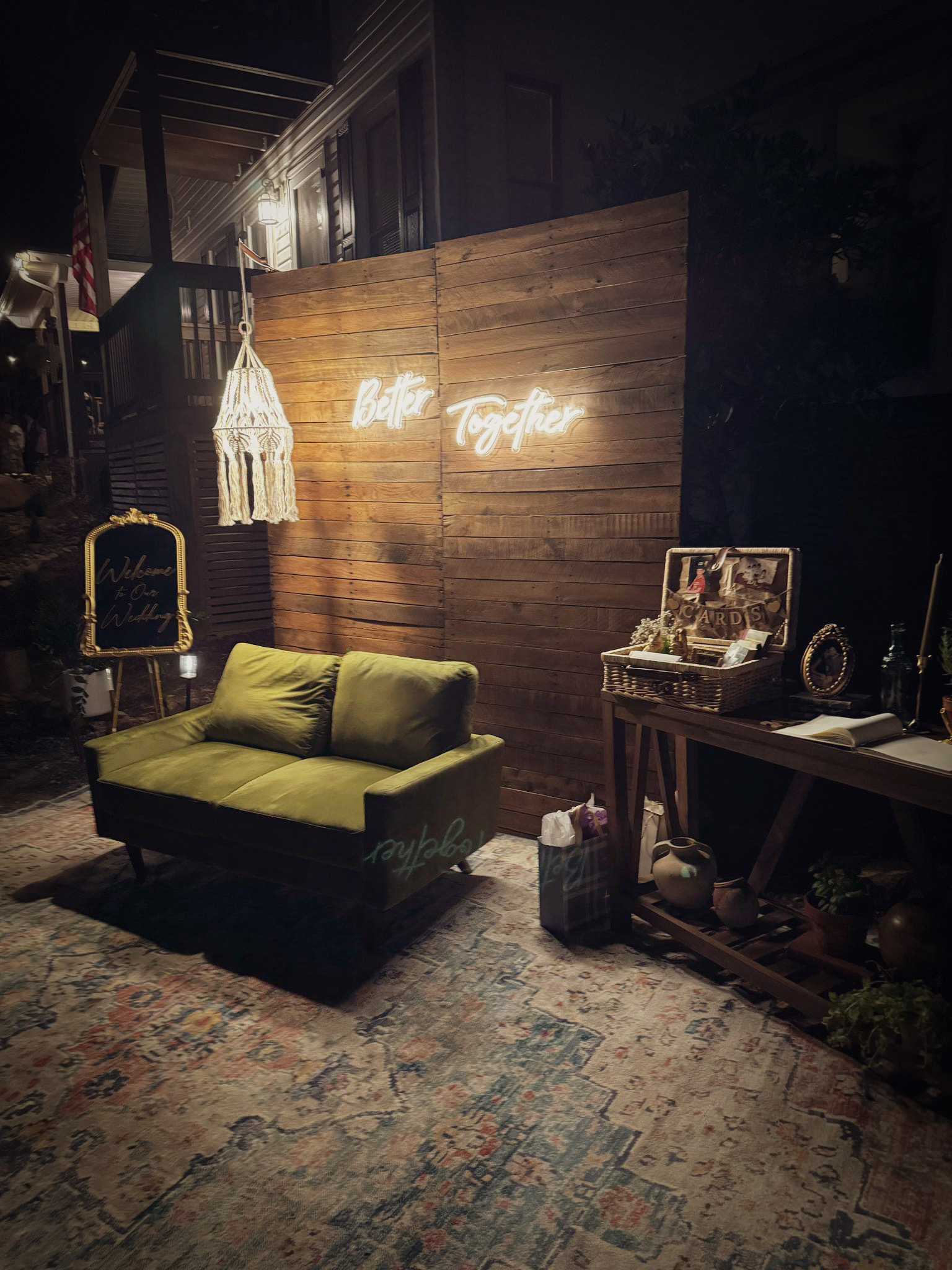
Pao took on all of the decor and styling, and to be honest, I wasn't entirely sure how it would come together. She was finding things in the most unexpected places — Facebook Marketplace, estate sales, online shops, antique stores — over a stretch of weeks before the wedding. She had a clear vision in her head: vintage, warm, candle-lit, layered with little personal touches. She'd describe pieces to me, I'd nod, and a few days later something would arrive that I couldn't quite picture in context.
And then on the day, all of it came together. Guests walked in and stopped — over and over — to take in details. The vintage signage. The way the tables were laid out. The photo booth area in front of the house with Polaroids and a guest book where every person wrote a note. None of it looked like a wedding catalog. It looked like Pao. And that's exactly what made it work.
Logistics that mattered more than we expected
A few practical decisions ended up doing a disproportionate amount of work for us. The biggest one was renting a portable bathroom — a really nice one, the kind built for weddings. A new local startup delivered it the morning of and picked it up afterward. That single decision kept fifty guests from cycling in and out of the house all day, and it kept the property's septic system from being asked to do something it wasn't designed for over the course of an evening with that many people on site. If you're considering a wedding on private land, this is the unglamorous detail nobody talks about that we'd urge you not to skip.
Parking we debated. We considered having guests park at a separate location and shuttling them up to the property. In the end, the property had enough space, and most of our guests planned to drive home that night rather than stay over — so we kept it simple and parked everyone on site. It worked. If we'd had a hundred guests, it would have been a different conversation.
Doubts, and the one thing we'd do differently
To be honest, we never had a moment where we second-guessed the decision to do the wedding ourselves. We had moments of this is a lot of moving pieces, but never this was the wrong call. The setting kept centering us every time we went up to the property. We knew this was right.
If we were doing it again, the one thing we would change is having someone — a real person, designated, responsible — running the day on the ground. We had a friend who informally played that role and did beautifully, but if we did it again, we'd hire it out or assign it formally. As the bride and groom, you don't want to be the people getting asked where the cake knife is, or whether the music transition is supposed to happen now. You want to be present. A day-of coordinator gives you that.
The advice we'd offer another couple thinking about going this route is short. Put your time and money into the things that genuinely matter to you. Let the small things work themselves out on the day — they will, because the people you've invited care about you. And don't be afraid to make the day smaller than the wedding industry tells you it should be. Some of what looks like compromise from the outside turns out to be what makes the day feel like yours.
The next post is about the day itself — the morning, the ceremony, the moment at sunset that we still talk about, and the way the whole thing flowed from afternoon arrivals to dancing under the stars. It's the most personal of the three, and the easiest one to write.
— Andrew & Pao